
GHK Cu Topical, How to Use It and What It Does

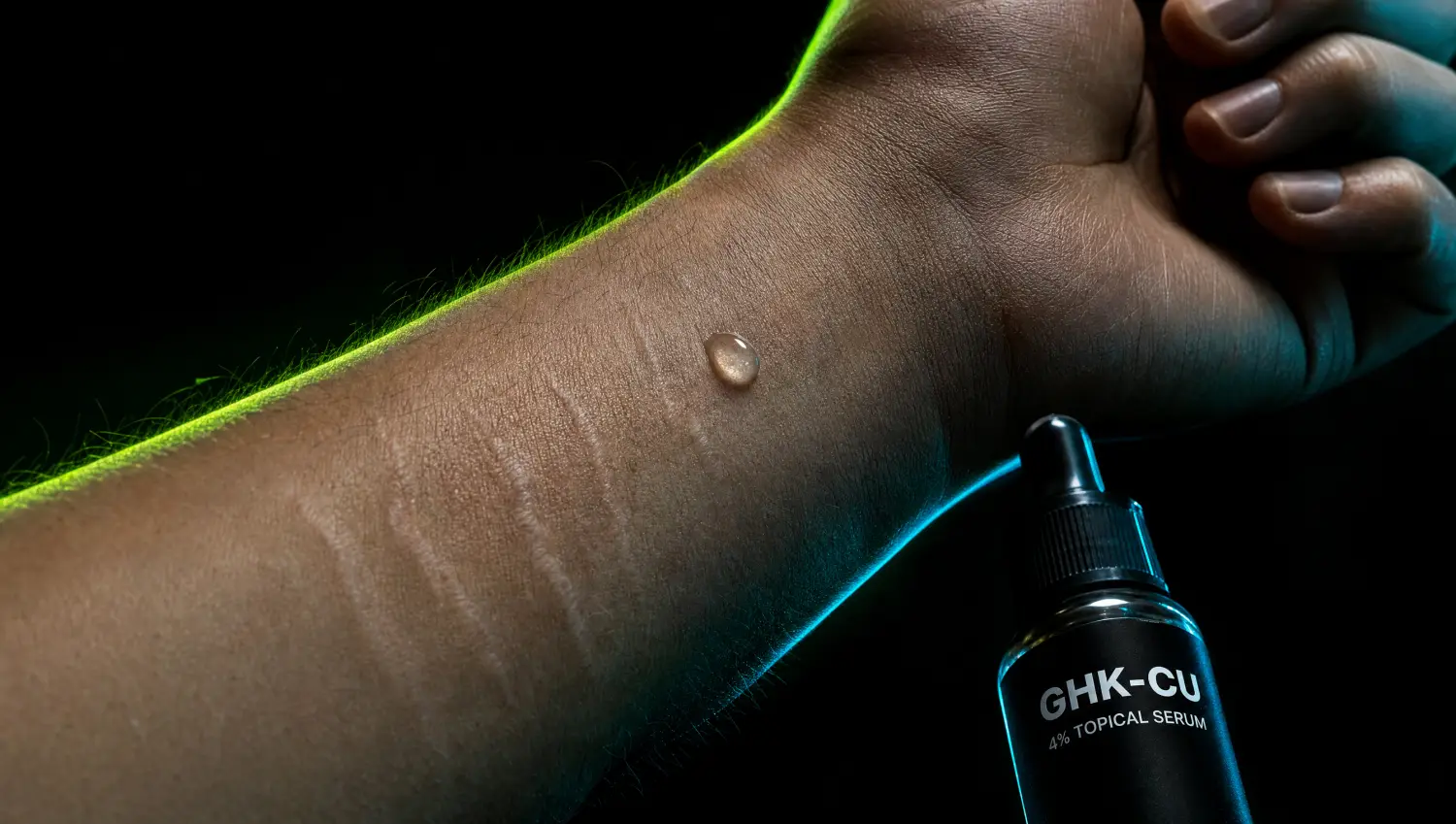
What does GHK-Cu topical do for your skin?
GHK-Cu topical works by delivering copper straight to your skin's fibroblasts, the cells that build collagen and elastin. It calms inflammation, speeds wound-repair signalling, and switches on genes tied to tissue repair. Most people apply it once or twice daily as a 2 to 4 percent serum and wait six to eight weeks for visible change.
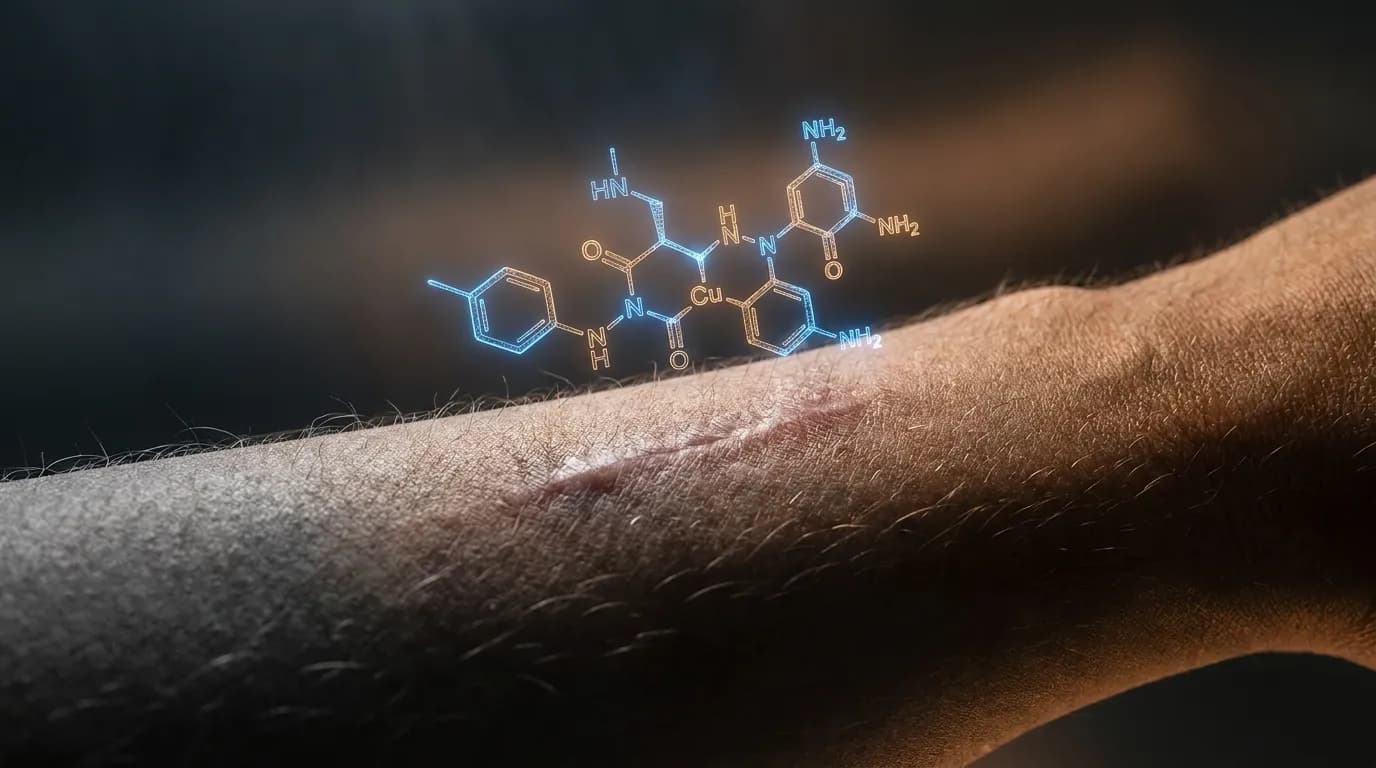
GHK-Cu is a tiny three-amino-acid chain called glycyl-L-histidyl-L-lysine. It occurs naturally in your blood, saliva and urine. It grabs onto copper and carries it into your skin cells. There, copper acts as a helper molecule. It helps enzymes stitch collagen fibres together. That's the whole mechanism in one sentence: copper delivery plus gene signalling equals repair.
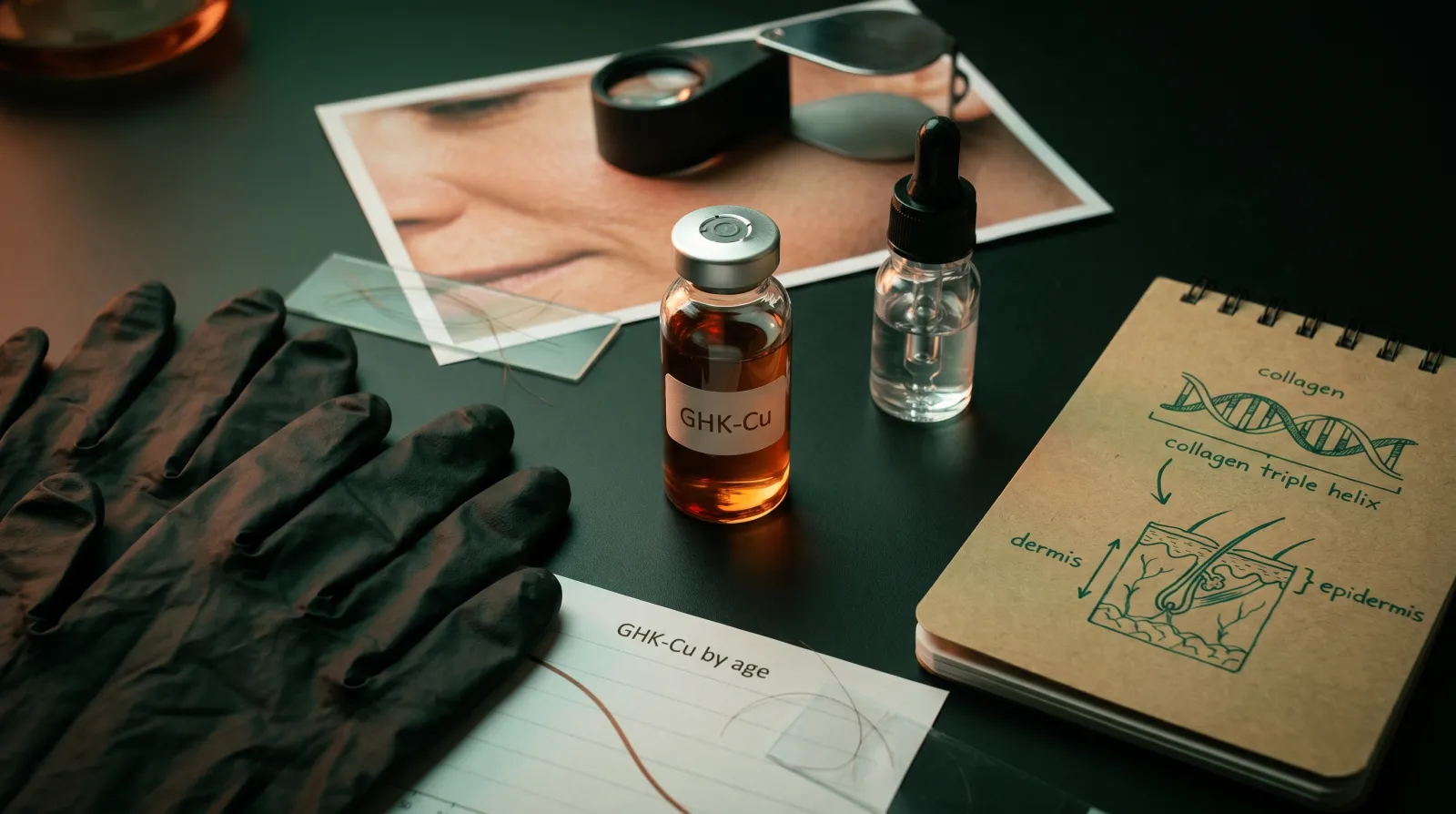
Your own GHK-Cu supply doesn't stay constant. Plasma levels sit around 200 ng/mL at age 20. They drop to roughly 80 ng/mL by age 60. This fall tracks closely with slower wound healing and looser skin as you get older (Dou 2020). Topical GHK-Cu is essentially an attempt to top that supply back up at the surface.
What strength of GHK-Cu topical should you use?
Concentration and frequency depend on where you're applying it. Thinner skin needs a gentler dose. Thicker skin on the face and neck tolerates more.
| Area | Concentration | Frequency |
|---|---|---|
| Eye area | 2% | Once daily |
| Face and neck | 4% | Once or twice daily |
| Body (scalp, hands) | 4% | Once daily |
Start at the lower end of a concentration if you haven't used a copper peptide before. Irritation is uncommon at these strengths, but new products are worth patch-testing on your inner forearm for 48 hours first. Give any routine 6 to 8 weeks before judging it. Collagen turnover is slow, so a week or two tells you nothing.
Is topical GHK-Cu better than injectable GHK-Cu?
They're not interchangeable. The gap in bioavailability, meaning how much of the peptide actually reaches your bloodstream, is large. Injectable GHK-Cu delivers roughly 50 to 100 times more peptide into your bloodstream than a cream rubbed on the surface. Topical application only penetrates about 0.3 to 0.5 mm into skin. This limits it to the outer layers. You need an enhancer, like a liposome carrier or microneedling, to go deeper.
| Topical GHK-Cu | Injectable GHK-Cu | |
|---|---|---|
| Bioavailability | Low, surface-limited | 50 to 100x higher |
| Typical use | Skin texture, fine lines, localised repair | Systemic tissue repair goals |
| Access | Over-the-counter serums | Requires sourcing and supervision |
| Evidence base | Mixed clinical data | Stronger mechanistic and preclinical data |
If your goal is a visible change in skin texture and firmness, topical is the sensible starting point. It's non-invasive, and it has the most direct clinical testing behind it. If you're chasing broader tissue repair, that's a different conversation. It comes with a much higher bar for oversight. That isn't what the topical evidence below actually supports.
What does the collagen and wound-repair research actually show?
Scientists know how GHK-Cu works. GHK-Cu binds to copper. It uses this copper to turn on enzymes that cross-link collagen, meaning they link collagen fibers together to make tissue stronger. GHK-Cu also turns on genes that help repair tissue. At the same time, it turns off inflammatory genes, over 4,000 of them by some counts (Pickart 2015). In lab-grown skin cells, GHK-Cu increases collagen and elastin output, even in very small amounts. The original study on how GHK-Cu works also showed that it draws repair cells to the injured area. It also boosts blood-vessel growth, which helps wounds close (Pickart 2008).
An 8-week randomised trial gives the strongest human evidence. Researchers tested a nano-carrier topical GHK-Cu formula. It cut wrinkle volume by 31.6%. They compared it with Matrixyl 3000, a well-known cosmetic peptide (Pickart & Margolina 2018). Pairing GHK-Cu with hyaluronic acid boosts the collagen response even more. One lab and ex-vivo skin study, meaning skin tested outside the body, looked at a 1:9 ratio of the two. This ratio raised collagen IV synthesis 25-fold in fibroblast cells. It roughly doubled collagen IV in a whole-skin model (Jiang 2023).
Not every trial lands the same way. In an animal (rat) model of irradiated wounds, twice-daily GHK-Cu gel improved markers of new blood-vessel growth over 10 days compared with control. This supports the underlying mechanism (Parker 2013). A small human trial tested GHK-Cu on skin after CO2 laser resurfacing. It found no measurable improvement in redness or wrinkles against a placebo. Patients still reported liking it more (Miller 2006).
Where do the anti-ageing claims run ahead of the evidence?
Here's the honest gap. A 2025 systematic review of topical GHK looked at the whole cosmetic literature. It found strong cellular evidence for anti-wrinkle activity. But it found a surprising shortage of proper clinical trials, given how widely GHK is sold (Mortazavi 2025). Most of what's marketed as "proven" comes from fibroblast dishes and rodent (rat) wounds, not large human trials.
There's also a stability problem worth knowing about. GHK-Cu breaks down quickly when it hits carboxypeptidase enzymes in wound fluid. This is one reason chronic wound results are inconsistent, unless the peptide is stabilised or encapsulated (Castro 2025). A serum that markets itself on wound-healing language for cuts or scars is stretching the data. Most of that data comes from a dish or a mouse, not human skin.
Treat topical GHK-Cu as a texture and firmness product. It has reasonable mechanistic backing, meaning early lab evidence for how it might work. But it's not a guaranteed anti-ageing fix. Anecdotally, users in the recovery and biohacking space report smoother, firmer skin after consistent use. But that's anecdote, not trial data.
How do you build a simple topical GHK-Cu routine?
Keep it boring and consistent. That's what the 8-week trials actually tested.
- Apply a 2 to 4% GHK-Cu serum once or twice daily, cleaned skin first.
- Pair GHK-Cu with hyaluronic acid if you want a stronger collagen signal. This is based on the fibroblast data above.
- Space it two hours from any oral copper supplement. This stops you from stacking too much copper at once.
- Give it a full 6 to 8 week block before deciding whether it's working.
- Patch-test any new formula for 48 hours before applying it to your face.
Want to look further into how peptides like this are researched, tested and sourced? Our recommended sources page can help. It lays out what to check on a certificate of analysis before you trust a supplier.
If you're researching this compound, I've linked a trusted source below. It supports the channel.
Read next: our guide on BPC-157 dosing looks at another peptide used for repair. Our overview of what peptides actually are is a good starting point if GHK-Cu is your first one.
Related: CJC-1295 Complete Guide: Mechanism, Dosing, Cycle Length, 6 Best Peptides for Anti-Ageing and Longevity (2026)
Where to buy GHK-Cu
If you're researching this compound, I've linked a trusted source below. It supports the channel.
See the sources that passed →Bibliography
- Pickart et al. 2015, GHK Peptide as a Natural Modulator of Multiple Cellular Pathways in Skin Regeneration.
- Pickart & Margolina 2018, Regenerative and Protective Actions of the GHK-Cu Peptide in the Light of the New Gene Data.
- Mortazavi et al. 2025, Topically applied GHK as an anti-wrinkle peptide.
- Dou et al. 2020, The potential of GHK as an anti-aging peptide.
- Pickart 2008, The human tri-peptide GHK and tissue remodeling.
- Parker et al. 2013, Effects of topical copper tripeptide complex on wound healing in an irradiated rat model.
- Jiang et al. 2023, Synergy of GHK-Cu and hyaluronic acid on collagen IV upregulation.
- Miller et al. 2006, Effects of topical copper tripeptide complex on CO2 laser-resurfaced skin.
- Castro et al. 2025, Nanoengineered Self-Assembling Peptides with Increased Proteolytic Stability Promote Wound Healing.
This content is for educational purposes only. These compounds are intended for research use. Nothing here is medical advice. Always work with a qualified clinician before making changes to your health protocol.
Where to buy GHK-Cu
If you're researching this compound, I've linked a trusted source below. It supports the channel.
See the sources that passed →Share this article
Frequently Asked Questions
What is GHK-Cu and how does it work in topical skin care?
What strength of GHK-Cu topical should you use?
How long does it take to see results from topical GHK-Cu?
Is topical GHK-Cu better than injectable GHK-Cu?
Does GHK-Cu actually reduce wrinkles?
Is topical GHK-Cu safe?
Read Next
Disclaimer: This content is for educational purposes only. These compounds are intended for research use. Nothing here is medical advice. Always work with a qualified clinician before making changes to your health protocol.