
KPV Peptide Complete Guide: Mechanism, Benefits and Dosing

What Is KPV Peptide, and What Does It Do?
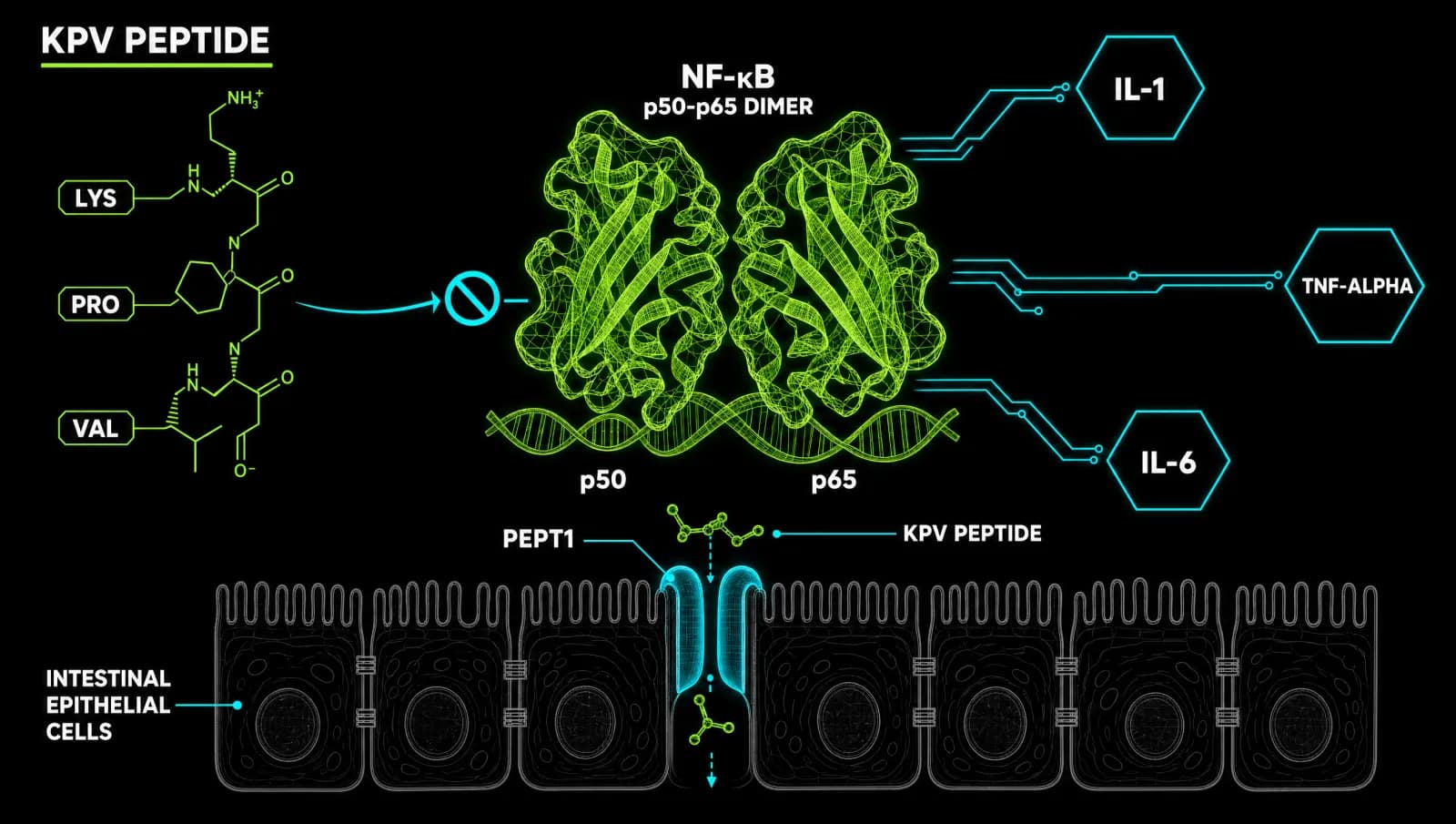
KPV peptide is a three-part fragment of alpha-MSH, a hormone your own immune system makes. Its letters are Lysine, Proline and Valine. It calms inflammation by blocking NF-kB, the switch that turns on inflammatory genes. It also slips into gut cells through a carrier called PepT1.
One disclosure first. This page links to third-party research compound suppliers. Underground Biohacking may earn a commission if you buy through those links, at no extra cost to you. We list only suppliers we have checked for purity paperwork. Our recommended sources page carries the current list.
Maybe you have been reading about gut inflammation, sore skin, or an immune system stuck in the on position. If so, you have probably seen KPV named next to BPC-157 or GHK-Cu. It works in a different way to both. It is not a growth factor. It is not a repair signal. It is a brake on one inflammatory switch, and your body already uses that brake.
This guide covers where KPV comes from and how it shuts that switch. It goes through what the animal and cell work shows for the gut and the skin. It also shows where KPV sits next to other peptides. I have kept the honest limits in view throughout.
This content is for educational purposes only. These compounds are intended for research use. Always work with a qualified clinician before you change your health protocol.
Where Does KPV Come From, and Why Is the Tail Piece Enough?
It comes off the end of a hormone you already make.
Your body builds a large protein called POMC, short for proopiomelanocortin. It then cuts POMC into smaller working peptides. One of them is alpha-MSH, which runs to 13 amino acids. The last three, at positions 11 through 13, are Lysine-Proline-Valine. That short tail is KPV. (Brzoska T et al., 2008)
Alpha-MSH is made in the pituitary gland and in tissue around the body. It docks onto melanocortin receptors, MC1R through MC5R. Those sit on immune cells, on skin, in the gut and in the brain. Researchers worked out decades ago that much of the calming power lives in that C-terminal tail.
So why is the tail enough on its own? It is small. It holds up well. And small peptides can ride transporters across the gut wall. Full alpha-MSH breaks down fast and is awkward to deliver. KPV skips most of that trouble and keeps the core mechanism.
A review by Singh and Mukhopadhyay (2014) found the same pattern. Alpha-MSH tail fragments, KPV among them, kill microbes and calm immune cells much as the whole peptide does. This is not a fringe pathway. It is one of the brakes your body reaches for under stress.
What Does KPV Peptide Do to NF-kB?
NF-kB is a switch inside the cell. Flip it on and it turns on hundreds of inflammatory genes. That list takes in IL-1, IL-6, TNF-alpha and COX-2. KPV blocks the switch, so the output drops at source rather than one message at a time. (Catania A et al., 2000)
Nearly every inflammatory signal feeds into NF-kB. Toll-like receptors do. NOD receptors do. So do cytokine signals and oxidative stress. Once NF-kB reaches the nucleus it starts printing inflammatory messengers, and those messengers switch it on again. In long-running illness that loop feeds itself.
KPV cuts into the loop. A 2025 study by Sung J et al. in Tissue and Cell found KPV acting on MAPK and NF-kB signalling together. It cut oxidative stress and stopped skin cells dying after fine dust exposure. The team saw two things at once. KPV blocked the steps that switch NF-kB on. It also lowered the reactive oxygen species that keep the loop burning.
Earlier work by Lipton JM and Catania A (1997) showed alpha-MSH damping fever and sudden inflammation. It works through the brain and through immune cells in tissue, using melanocortin receptors on macrophages and neutrophils. KPV binds that same receptor family. Ordinary anti-inflammatories only act where the tissue is already hurt.
How Does KPV Get Into Gut Cells Through PepT1?
It hitches a ride on a food transporter.
KPV crosses into gut lining cells on PepT1. PepT1 is a transporter whose day job is carrying small food peptides out of the gut. So KPV arrives intact, inside the tissue, where it can shut NF-kB down on the spot. It does not have to travel round the bloodstream first. (Dalmasso G et al., 2008)
That paper in Gastroenterology is the landmark one. The team showed KPV coming in on PepT1 and cutting gut inflammation in cell culture and in mouse colitis. The neat part is what happens under stress. PepT1 levels rise when tissue is inflamed. The door opens wider exactly when it is needed most.
This matters to anyone reading about bowel disease. An oral dose could, in theory, reach inflamed gut tissue at a useful level with no injection at all. A 2023 review by Gravina AG et al. in Cells agreed that the melanocortin system, KPV included, holds promise for inflammatory bowel disease. It named three routes: a tighter gut barrier, calmer immune cells and lower cytokines. Our KPV and gut health guide goes further into that use.
What Are the KPV Peptide Benefits for IL-1, IL-6 and TNF-Alpha?
KPV pushes down three of the cytokines doctors watch most. Cytokines are the immune system's messages. The three are IL-1, IL-6 and TNF-alpha. Biologic drugs cost tens of thousands of pounds a year to hit those same targets. KPV reaches them by blocking NF-kB upstream. It does not mop up each messenger in turn. (Macaluso A et al., 1994)
That team showed KPV, the alpha-MSH 11-13 tail, cutting inflammation when it was given round the body. It worked through the brain. It worked at tissue sites too. The work landed years before most of today's biologic drugs were approved.
The difference matters in the clinic. TNF-alpha blockers such as adalimumab and etanercept catch the cytokine after the cell has made it. They leave the instruction to make more untouched. KPV works on the instruction. In theory that damps a wider set of signals. And it does so without the immune suppression you get from blocking one messenger outright.
Alpha-MSH levels rise at inflamed sites in people. The body is reaching for its own brake. KPV can be read as a second hand on that same brake. (Lipton JM and Catania A, 1997)
Does KPV Kill Bacteria and Fungi Too?
Yes, and that is the surprising part.
KPV kills Staphylococcus aureus and the yeast Candida albicans directly. It does that at the tiny amounts the body itself reaches, from picomolar up to nanomolar. And it does not blunt a neutrophil's ability to kill. So it calms inflammation that has run out of control while leaving working defences alone. (Cutuli M et al., 2000)
That pairing is unusual. Most anti-inflammatory drugs trade some infection risk for calm. KPV seems to dodge the trade. The Cutuli team traced the effect to a rise in cAMP inside immune cells, which sharpens pathogen killing instead of dulling the oxidative burst.
Catania's group also reported alpha-MSH blocking NF-kB and slowing viral copying in HIV models, with KPV named as the active piece. So the immune effects may reach past bacteria and yeast. That work is preclinical, and a long way from any clinic. (Catania A et al., 2000)
For gut work the antimicrobial side counts. Bowel disease often arrives with dysbiosis, which means the mix of gut microbes has gone wrong, and with overgrowth of opportunists. A compound that quiets the lining and still holds off S. aureus and C. albicans covers two jobs that usually need two treatments.
How Does the Peptide KPV Compare With NSAIDs and Corticosteroids?
KPV works through melanocortin receptors and a rise in cAMP. NSAIDs block COX enzymes. Corticosteroids switch on the glucocorticoid receptor. Biologic drugs block a cytokine or its receptor. The route differs, so KPV does not carry their gut, heart or broad immune-damping profiles. (Brzoska T et al., 2008)
NSAIDs cut prostaglandins by blocking cyclooxygenase. They work well for sudden inflammation. They also harm the gut lining and raise heart risk over long use. And they do nothing about the cytokine cascades behind long-term disease. KPV does not touch COX enzymes at all.
Corticosteroids bind the glucocorticoid receptor everywhere. That presses the whole immune system down. Powerful, and blunt. Long use brings adrenal suppression, thinner bones, insulin resistance and slower healing. KPV acts on set receptors on immune cells, so its reach is narrower.
| Approach | What it blocks | Main trade-off |
|---|---|---|
| KPV | NF-kB, upstream of the cytokines | No large human trials behind it |
| NSAIDs | COX enzymes and prostaglandins | Gut damage, heart risk over long use |
| Corticosteroids | The glucocorticoid receptor, body-wide | Adrenal suppression, bone loss, insulin resistance |
| Biologic drugs | One cytokine, or its receptor | Cost, injections, infection risk |
None of that says KPV beats an approved medicine for any condition. It is a map of where KPV sits and why the research is worth following. Always work with a qualified clinician before you change your health protocol.
What Does KPV Peptide Do for Skin?
The same two pathways run in skin as in gut.
KPV calms skin cells by working on two paths at once, MAPK and NF-kB. It lowers oxidative stress and stops keratinocytes dying when something in the air irritates them. Keratinocytes are the main cells of the outer skin. That makes KPV a skin research subject, not only a gut one. (Sung J et al., 2025)
The Sung study is the closest look at KPV in skin so far. The team used fine dust as the irritant. KPV cut markers of oxidative stress. It damped MAPK activity across ERK, JNK and p38. It kept NF-kB out of the nucleus. More cells survived, and inflammatory output fell on every measure the team took.
Older work reviewed by Hiltz ME and Lipton JM (1990) found alpha-MSH peptides cutting fever, sudden swelling and contact reactions in skin. Skin is thick with melanocortin receptors. Keratinocytes carry them. So do melanocytes and Langerhans cells, the immune sentries of the skin. KPV reaching those cells is what makes this research plausible rather than merely hopeful.
What Is KPV Peptide Used For, and How Good Is the Evidence?
KPV carries about thirty years of steady preclinical work. It runs from the first mechanism studies of the 1990s to the MAPK and NF-kB work of 2025. The findings line up across tissue types. Human trials are the gap. That gap is why every claim here stays loose. (Brzoska T et al., 2008)
The timeline reads as one story, not a pile of clashes. Early work showed KPV calming inflammation when given round the body. Then came the finding that it kills microbes at body-level amounts. Then PepT1 uptake in the gut. Then proof that KPV works on MAPK and NF-kB at once.
Different groups. Different countries. Different decades. They land in the same place. KPV blocks NF-kB. It lowers inflammatory cytokines. It keeps its microbe-killing edge. And it does all of that through melanocortin signalling. That kind of agreement is a fair sign the mechanism is real, even with no large human trial.
Here is where each claim stands today:
- NF-kB blocking: shown across several preclinical models and mechanism studies.
- PepT1 gut uptake: shown in cell culture and in mouse colitis models.
- Cytokine suppression of IL-1, IL-6 and TNF-alpha: preclinical and mechanistic.
- Antimicrobial activity: preclinical, at picomolar amounts in the dish.
- Human bowel disease treatment: no completed randomised controlled trials, so the case rests on preclinical data and melanocortin reviews.
So treat KPV as a compound with a strong mechanism and good animal work behind it. Do not treat it as an approved medicine with settled dosing.
How Does KPV Sit Alongside BPC-157 and GHK-Cu?
Think of the three as different tools, not rivals.
KPV fills a set slot. Among the peptides people research, it is the NF-kB option. BPC-157 works mainly through growth factor and blood vessel routes. GHK-Cu works through copper and gene switching. The three barely overlap. That is the whole reason people pair them.
BPC-157 runs through VEGF signalling, nitric oxide and growth factor receptors. All of those point at tissue repair. GHK-Cu carries copper into cells and shifts the activity of over 4,000 genes. KPV's narrow work on NF-kB sits apart from both.
For the gut, the pairing is easy to reason about. KPV handles the inflammatory driver. BPC-157 handles the repair. That is a hypothesis, not clinical guidance. Nobody has tested the pair in people. Our KPV and BPC-157 gut stack guide covers how the pairing gets discussed and where its evidence stops.
If you do decide to research KPV, sourcing is the part that bites. Our recommended sources page lists vendors with current third-party purity testing.
Where to source it
Research-grade KPV from a verified supplier with third-party purity documentation. See our recommended sources before purchasing.
See the sources that passed →References
- Dalmasso G et al. PepT1-mediated tripeptide KPV uptake reduces intestinal inflammation. Gastroenterology. 2008. PMID 18061177
- Brzoska T et al. Alpha-melanocyte-stimulating hormone and related tripeptides: biochemistry, antiinflammatory and protective effects in vitro and in vivo. Endocrine Reviews. 2008. PMID 18612139
- Catania A et al. The neuropeptide alpha-MSH in host defense. Ann N Y Acad Sci. 2000. PMID 11268348
- Macaluso A et al. Antiinflammatory influences of alpha-MSH molecules: central neurogenic and peripheral actions. J Neurosci. 1994. PMID 8158274
- Cutuli M et al. Antimicrobial effects of alpha-MSH peptides. J Leukoc Biol. 2000. PMID 10670585
- Lipton JM and Catania A. Anti-inflammatory actions of the neuroimmunomodulator alpha-MSH. Immunol Today. 1997. PMID 9078687
- Singh M, Mukhopadhyay K. Alpha-melanocyte stimulating hormone: an emerging anti-inflammatory antimicrobial peptide. BioMed Research International. 2014. PMC4130143
- Hiltz ME and Lipton JM. Alpha-MSH peptides inhibit acute inflammation and contact sensitivity. Peptides. 1990. PMID 2284205
- Gravina AG et al. The Melanocortin System in Inflammatory Bowel Diseases: Insights into Its Mechanisms and Therapeutic Potentials. Cells. 2023. PMC10378568
- Sung J et al. Lysine-Proline-Valine peptide mitigates fine dust-induced keratinocyte apoptosis and inflammation by regulating oxidative stress and modulating the MAPK/NF-kB pathway. Tissue & Cell. 2025. PMID 40073467
This content is for educational purposes only. These compounds are intended for research use. Nothing here is medical advice. Always work with a qualified clinician before making changes to your health protocol.
Where to source it
Research-grade KPV from a verified supplier with third-party purity documentation. See our recommended sources before purchasing.
See the sources that passed →Share this article
Frequently Asked Questions
What is KPV peptide, and how does it work?
How does KPV get into gut cells, and what does it do there?
What has KPV been researched for?
Does KPV kill microbes as well as calming inflammation?
How are KPV and alpha-MSH related?
How does KPV compare with NSAIDs and corticosteroids?
Read Next

Disclaimer: This content is for educational purposes only. These compounds are intended for research use. Nothing here is medical advice. Always work with a qualified clinician before making changes to your health protocol.