
BPC-157 Herniated Disc: What the Evidence Really Shows


Does BPC-157 Help With Herniated Disc?
BPC-157 herniated disc claims rest on studies that never looked at a disc. A PubMed search we ran on 5 October 2026 found no BPC-157 study of disc tissue, in animals or in people. The closest work is in rats, on a pressed spinal cord and a cut leg nerve. None of it shows a disc that shrank or healed.
BPC-157 is a peptide, a short chain of 15 amino acids, the building blocks of protein. It is part of a protein first found in human stomach juice (Chang et al.). In animal studies, it improved healing of muscle, tendon, ligament and bone injuries, a 2025 review found. A herniated disc is a different problem. Part of the disc pushes out of place and can press on a nerve root, the nerve branch that leaves the spine. The rest of this page sets out what has and has not been tested.
What Does the BPC-157 Herniated Disc Study Actually Show?
There is no BPC-157 herniated disc study. The nearest one is a rat spinal cord study. Surgeons first did a laminectomy, removing part of the back of a vertebra (spine bone). Then a small weighted piston pressed on the covering of the spinal cord for 60 seconds. Ten minutes later, each rat got one shot of BPC-157 or salt water into the belly. The treated rats had steadily better tail movement than the controls. Their spasticity (stiff, spasming muscles) in the tail had cleared by day 15. The controls stayed stiff to the end of the study, on day 360. Under the microscope, treated rats lost fewer nerve fibres and motor nerve cells (Perovic et al. 2019). The study did not look at any disc.
A second rat study cut the sciatic nerve, the main nerve of the leg. BPC-157 went into the belly, by tube into the stomach, or at the repair site, soon after the injury. Treated rats regrew nerve fibres faster than untreated rats. Their myelin, the fatty coat around nerve fibres, was thicker. Their walking scores improved too (Gjurasin et al.). A cut nerve is a different injury from a nerve root pressed by a disc.
Does BPC-157 Heal Herniated Disc, or Just Relieve Symptoms?
No study has measured either one for BPC-157 in a disc. Many herniated discs also shrink without surgery. A 2023 review pooled 16 studies of 360 herniated discs in the lower back. Each disc had at least two MRI scans, and none had surgery. The chance of the disc shrinking without surgery ran from 13.3% for bulging discs to 93.0% for sequestered ones. A sequestered disc is one where a piece has broken off. The review also found that symptoms getting better went along with the disc shrinking (Rashed et al.). A 2022 review sets out how the body clears this material. Macrophages, immune cells that clear debris, move into it. The review also lists inflammation, reshaping of the disc tissue and new blood vessel growth (Yu et al.). No BPC-157 study with an untreated comparison group has looked at this process.
What Does Disc Anatomy Mean for BPC-157 Herniated Disc Claims?
The disc has no blood vessels inside it, so it is called avascular. Small nutrients like oxygen and glucose (blood sugar) reach disc cells almost wholly by diffusion. That is slow seepage from blood vessels at the disc's edges. When this supply fails, disc cells can die and the disc can break down (Urban et al. 2004).
In lab work, BPC-157 raised the number of blood vessels. It did this in chick egg membranes, in dishes of human blood vessel cells, and in rats with blocked blood flow to a hind leg. It raised VEGFR2, a receptor (docking site on cells) that drives blood vessel growth. In human blood vessel cells in a dish, it did not raise VEGF-A, the signal that binds to that receptor (Hsieh et al.). No study has tested whether this happens in a disc. In the same Chang lab study, rat tendon cells moved faster with BPC-157. The authors said this was likely driven by the FAK-paxillin pathway, a pair of proteins that helps cells crawl. Tendon cells are not disc cells, and no study has tested disc cells.
Is There Human Evidence for BPC-157 and Herniated Disc in 2026?
No human study has tested BPC-157 for a disc or for back pain. FDA's July 2026 review found five small human studies of BPC-157 in all. They gave it by enema (into the bowel through the back passage), into the knee, into the bladder wall, or by drip into a vein. FDA said there is too little safety data from people to know how safe it is (FDA BPC-157 briefing). A 2025 review on sports injuries found 544 articles and kept 36. Only 1 of the 36 was a study in people (Vasireddi et al.).
The nearest human report on joints is a chart review of knee pain at a Florida clinic. Of 16 patients reached by phone, 12 had BPC-157 alone injected into the knee. Of those 12, 11 had significant improvement in knee pain, by their own report. The study used no tools to measure function, and it was about knees, not discs (Lee and Padgett 2021). A 2025 pilot gave 2 adults BPC-157 by drip into a vein. Neither reported side effects. Their heart, liver, kidney and thyroid markers did not change (Lee and Burgess). The table sets out what each study tested, in its own terms. Our BPC-157 tendon repair page covers the rat tendon and ligament work in more detail.
| Study | Who or what | Injury or test | How BPC-157 was given | What it found |
|---|---|---|---|---|
| Perovic et al. 2019 | Rats | Spinal cord pressed for 60 seconds after laminectomy | One shot into the belly, 200 or 2 µg/kg, 10 minutes after injury | Better tail movement; tail spasticity gone by day 15; fewer nerve fibres and motor nerve cells lost |
| Gjurasin et al. | Rats | Sciatic nerve cut | 10 µg or 10 ng/kg, as the abstract reports it, into the belly, by stomach tube or at the repair site | Faster nerve regrowth, thicker myelin, better walking scores |
| Hsieh et al. | Chick egg membranes, human blood vessel cells, rats | Blood vessel growth; blocked blood flow to a hind leg | Not a disc or spine test | More blood vessels; more VEGFR2; in human cells, not more VEGF-A |
| Lee and Padgett | 16 adults reached by phone | Knee pain | Injected into the knee; 12 had BPC-157 alone | 11 of 12 had significant improvement in pain, by phone survey; no measuring tools used |
| Lee and Burgess | 2 adults | Safety only | Drip into a vein, 10 mg on day 1, 20 mg on day 2 | No side effects; no change in heart, liver, kidney or thyroid markers |
| Any disc study | None found | Disc tissue or disc pain | Not tested | No data (PubMed search, 5 October 2026) |
Where to Inject BPC-157 for Herniated Disc? No Study Has Tested a Site
No study has tested where to inject BPC-157 for herniated disc pain, or at what dose. The rat spinal cord study gave one shot into the belly cavity, not near the spine. The sciatic nerve study gave it into the belly, by stomach tube, or at the nerve repair site. The knee report injected it into the knee joint. None of these was a disc or spine injection. The human doses we found are listed by study on our BPC-157 dosing protocol page.
BPC-157 and TB-500 for Herniated Disc: Has the Pair Been Tested?
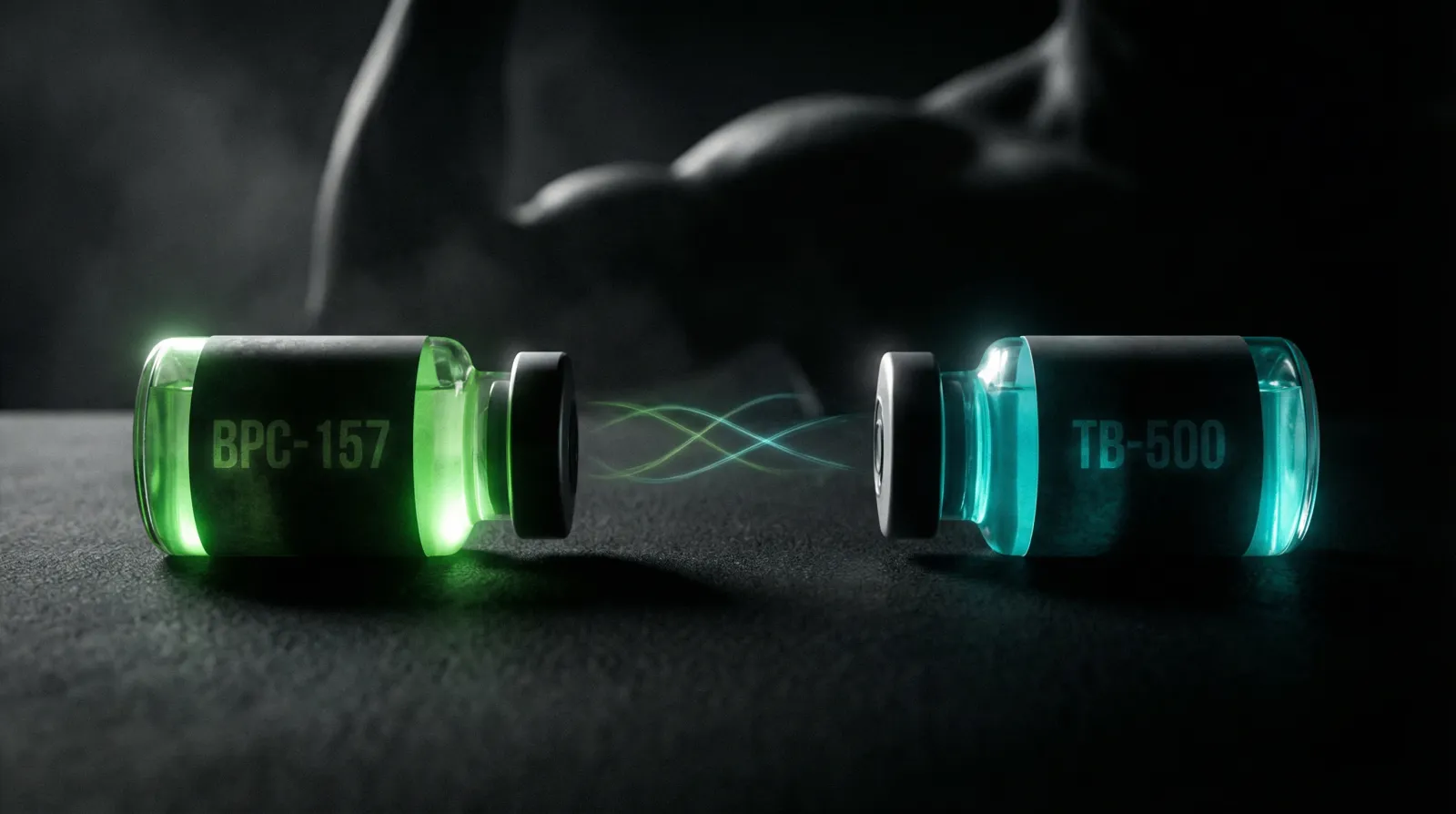
No study has tested BPC-157 and TB-500 for herniated disc pain, together or apart. FDA's 2026 review of TB-500 found no study in people, by any route (FDA TB-500 briefing). TB-500 is a piece of thymosin beta-4, a protein the body makes. It is just seven amino acids long. FDA says the two are not the same thing. In the Lee and Padgett knee pain report, 4 patients had BPC-157 with thymosin beta-4, not TB-500. Of those 4, 3 had significant improvement. Our BPC-157 and TB-500 stack page covers what is known about the pair. Our TB-500 complete guide covers TB-500 on its own.
What Is the Regulatory Status of BPC-157 for Herniated Disc?
BPC-157 is not an FDA-approved drug for any use. In July 2026, FDA proposed not adding it to the list of raw ingredients pharmacies may use, its BPC-157 briefing shows. That list falls under section 503A, the part of drug law that covers how pharmacies mix drugs. FDA said it would not make a final decision until its advisory committee had weighed in. The 2025 review on sports injuries warned that harm is possible from unregulated making and from contamination. Our guide on how to know if peptides are real covers ways to check a product. Our sources page sets out how we grade vendors.
This content is for educational purposes only. These compounds are intended for research use. A qualified clinician can advise on any health decision.
Where to buy BPC-157
If you're researching this compound, I've linked a trusted source below. It supports the channel.
See the sources that passed →Is BPC-157 Good for Herniated Disc? What the Evidence Adds Up To
The evidence does not show that it is. Rats with a pressed spinal cord or a cut leg nerve recovered better with BPC-157. No study has tested it on a disc, on a disc injury, or in people with disc pain. The disc has no blood vessels inside it, and one of BPC-157's lab effects is on blood vessel growth. Many herniated discs shrink on their own, and symptoms improving has been linked to that shrinking.
In sport, BPC-157 is banned at all times, in and out of competition. The ban comes from WADA, the World Anti-Doping Agency (WADA Prohibited List). Our BPC-157 and WADA page covers the anti-doping rules.
Where to buy BPC-157
If you're researching this compound, I've linked a trusted source below. It supports the channel.
See the sources that passed →Share this article
Frequently Asked Questions
Can BPC-157 heal a herniated disc?
What do lab studies show about BPC-157 and nerves?
Is BPC-157 FDA-approved for back pain?
What do human studies show about BPC-157 safety?
Has BPC-157 and TB-500 for herniated disc been studied?
Read Next
Disclaimer: This content is for educational purposes only. These compounds are intended for research use. Nothing here is medical advice. Always work with a qualified clinician before making changes to your health protocol.