
Retatrutide Side Effects: What Phase 2 and 3 Trials Show

What Are the Side Effects of Retatrutide?
Most retatrutide side effects are stomach problems. Gut side effects, such as nausea, diarrhoea, vomiting and constipation, were the most common type of side effect in Phase 2 and Phase 3 trials. They rise with dose. Dysesthesia, an odd skin sensation, rises at higher doses. Serious events showed no clear difference from placebo, a dummy shot, in combined early trials.
Nothing below comes from anecdote. The sources are trial papers, trial records, published reviews and the drug maker's own trial reports. They also include the FDA label for semaglutide, an approved weight-loss drug. Some of the reviews are meta-analyses, which pool the results of several trials. Phase 2 and Phase 3 trials are the larger human tests run before a drug can be approved. If you are researching this compound, our sources page gives a vendor-neutral rundown. This content is for educational purposes only, the compounds are intended for research use, and none of it replaces a conversation with your own clinician.
Retatrutide is still under investigation for obesity and type 2 diabetes. Bellido 2026
Retatrutide Side Effects in the Gut: How Common Are They?
Stomach symptoms are the largest single category.
In TRIUMPH-1, a large Phase 3 trial, the top rate for each of the four main gut symptoms fell between 25% and 43%. Lilly 2026 Our retatrutide dosage guide sets out the dose steps the trials used.
The Phase 2 obesity trial enrolled 338 adults for 48 weeks. Gut symptoms were its most common side effects. They rose with dose and were mostly mild to moderate. A lower starting dose, 2 mg rather than 4 mg, partly reduced them. The same study logged a 24.2% mean weight loss at 12 mg, against 2.1% on placebo at 48 weeks. Jastreboff 2023
A Phase 2 study in type 2 diabetes told a similar story. Mild to moderate gut complaints, such as nausea, diarrhoea, vomiting and constipation, hit 35% of those on retatrutide. That compared with 13% on placebo. The rate was 13% on the lowest dose, 0.5 mg. In the 8 mg group that started at 4 mg, a faster dose rise, it was 50%. Rosenstock 2023
The bigger Phase 3 programme gives rates symptom by symptom. TRIUMPH-1 tested 4, 9 and 12 mg in 2,339 adults with obesity but no diabetes, over 80 weeks. Jastreboff 2026
For TRIUMPH-1, Lilly reported nausea from 28.6% to 42.4%, against 14.8% on placebo. Diarrhoea ran 25.2% to 34.1%, against 13.5%. Vomiting reached 10.6% to 25.3%, against 4.8%. Constipation ran 23.8% to 26.1%, against 10.9%. Lilly 2026
TRIUMPH-2 tested the same doses in 1,152 adults with obesity and type 2 diabetes. Nausea climbed with each dose step, from 14% to 21% to 28%, versus 8%. Bellido 2026
The table puts the two Phase 3 trials side by side. For TRIUMPH-2, n/r means the abstract gives no figure, and the stopping row also counts deaths.
| Side effect | TRIUMPH-1, no diabetes (4 to 12 mg) | TRIUMPH-1 placebo | TRIUMPH-2, type 2 diabetes (4, 9, 12 mg) | TRIUMPH-2 placebo |
|---|---|---|---|---|
| Nausea | 28.6% to 42.4% | 14.8% | 14%, 21%, 28% | 8% |
| Diarrhoea | 25.2% to 34.1% | 13.5% | 27%, 34%, 34% | 13% |
| Vomiting | 10.6% to 25.3% | 4.8% | n/r | n/r |
| Constipation | 23.8% to 26.1% | 10.9% | n/r | n/r |
| Dysesthesia | 5.1% to 12.5% | 0.9% | 4%, 6%, 7% | 1% |
| Stopped for side effects | 4.1% to 11.3% | 4.9% | 4%, 12%, 8% | 5% |
Retatrutide Side Effects on the Skin: What Is Dysesthesia?
Dysesthesia is an abnormal sense of touch. It can feel like tingling, prickling, or skin that feels different to the touch. TRIUMPH-1 put it at 5.1% to 12.5% across the three doses, versus 0.9% without the drug. Lilly reported that most cases were mild to moderate and cleared up during treatment. Most people kept taking the drug. Lilly 2026
The highest figure among the trials cited here came from TRIUMPH-4. That trial ran 68 weeks in 445 adults with overweight or obesity and knee osteoarthritis. The term describes wear of the knee joint. Dysesthesia hit 20.9% on 12 mg and 8.8% on 9 mg, against 0.7% on placebo. Lilly 2025
The diabetes trial, TRIUMPH-2, saw 4%, 6% and 7% at 4, 9 and 12 mg, versus 1%. Bellido 2026
A 2025 review listed skin hyperesthesia among the less common side effects. Hyperesthesia means extra sensitive skin. The trial reports cited here do not explain why it happens. Katsi 2025
How Do Retatrutide Side Effects Affect Heart Rate?
Heart rate is one of the retatrutide side effects the trials track.
In the Phase 2 obesity trial, heart rate rose with dose. The rise peaked at 24 weeks and fell after that. Jastreboff 2023
Pooling three early trials showed no clear change in pulse rate versus placebo. The average gap was 2.65 beats per minute. Major heart and blood vessel events showed no clear gap either. Rhythm disturbances were reported more often on the drug. The risk ratio was 3.41, meaning they were 3.41 times as common as on placebo. The difference was not statistically significant (p = 0.08), so chance could not be ruled out. Pasqualotto 2024
Low blood pressure showed up more often in TRIUMPH-2. Rates were 1%, 5% and 6% across the three doses, versus under 1% for the dummy group. Bellido 2026
Is Retatrutide Safe? What the Serious Events Show
Serious side effects were uncommon in the trials. In the Phase 2 obesity trial they hit 4% of the placebo group and 0% to 6% of the retatrutide groups. Three risks are worth looking at one by one: pancreatitis, thyroid tumours and gallbladder disease. Jastreboff 2023 NCT04881760
A pooled analysis of three trials saw no clear gap in serious events. It did see more adverse events overall. An adverse event is any unwanted health problem during a trial, whether or not the drug caused it. The chance of having any was about 18% higher on the drug. Pasqualotto 2024
A 2025 review of three trials with 878 people saw no clear difference in overall adverse events. Abdrabou 2025
Pancreatitis means a swollen, inflamed pancreas. Pooled data showed no excess of pancreatitis. Amylase, a pancreas enzyme, rose on retatrutide. Lipase, another pancreas enzyme, did not rise by a clear margin. Pasqualotto 2024
In TRIUMPH-2, seven people died. Two were in the 4 mg group, three in the 9 mg group, one in the 12 mg group and one on placebo. The trial doctors judged every death unrelated to the study drug. Bellido 2026
A related Phase 2a substudy looked at 98 people with fatty liver disease. Doctors call it MASLD. This means fat has built up in the liver. A substudy is a smaller study run inside a larger trial. At 24 weeks, liver fat fell by 81.4% on 8 mg and 82.4% on 12 mg. On placebo it rose by 0.3%. In the parent trial, those two doses cut body weight by 22.8% and 24.2% over 48 weeks. Sanyal 2024
Retatrutide Side Effects and Cancer: What Is Known?
The cancer question for this drug class is thyroid C-cell tumours. C-cells are one type of cell in the thyroid gland. The concern comes from rodent studies. Semaglutide, an approved GLP-1 drug, causes these tumours in rodents. GLP-1 is a gut hormone, and GLP-1 drugs copy its action. Its FDA label says it is unknown whether it causes them in humans. FDA Wegovy label
TRIUMPH-1 kept out anyone with a personal or family history of medullary thyroid carcinoma (MTC). MTC is a rare thyroid cancer. It also kept out people with Multiple Endocrine Neoplasia type 2 (MEN 2). This is a genetic disorder that raises tumour risk. NCT05929066
Gallbladder events include gallstones and cholecystitis. Cholecystitis means a swollen gallbladder. Those same pooled data showed no clear excess of liver or gallbladder disease. Pasqualotto 2024
The semaglutide label notes that substantial or rapid weight loss can raise the risk of gallstones. It adds that acute gallbladder disease was still more common on semaglutide than placebo. The gap held even after accounting for the amount of weight lost. FDA Wegovy label
What Do Retatrutide Side Effects Clinical Trials Show About Dose Escalation?
Dose escalation means raising the dose in steps.
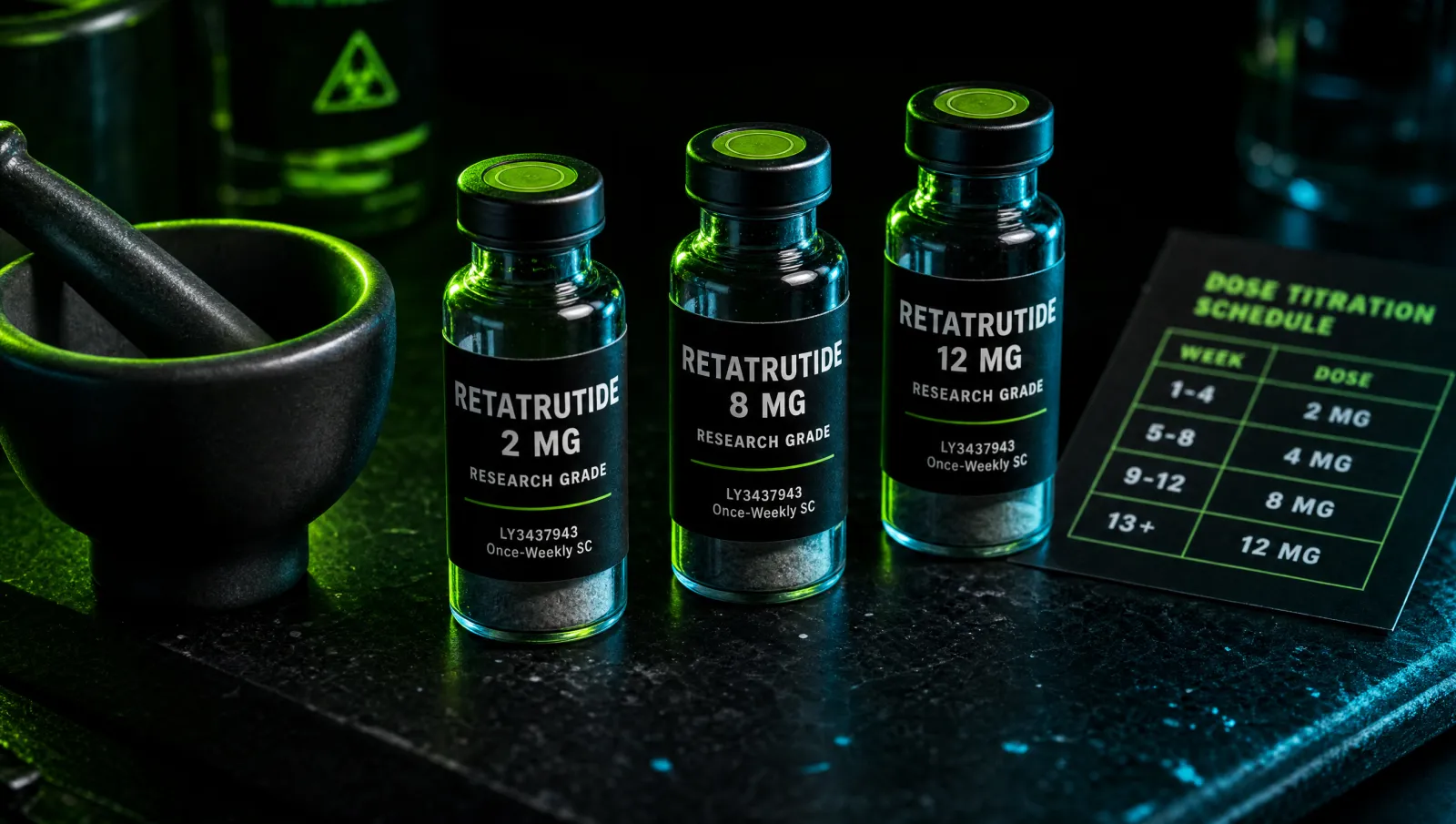
Phase 2 trials gave doses once a week, from 0.5 mg (Rosenstock 2023) to 12 mg (Jastreboff 2023).
In the obesity trial, a first dose of 2 mg rather than 4 mg partly reduced gut side effects. Jastreboff 2023
In TRIUMPH-1, Lilly reported stopping treatment because of any adverse event. The rate ran from 4.1% at 4 mg to 11.3% at 12 mg, versus 4.9% on placebo. Lilly 2026
The knee trial saw higher rates: 12.2% on 9 mg and 18.2% on 12 mg, versus 4.0%. Lilly said these rates tracked BMI at the start of the trial. BMI, or body mass index, scores weight against height. The rates also included people who stopped because they felt they had lost too much weight. Lilly 2025
Is Retatrutide Safe for Everyone? Who the Trials Left Out
Retatrutide is still being tested. The trials set rules on who could take part, and these rules are not safety findings. TRIUMPH-1 left out people with a personal or family history of MTC. It left out people with MEN 2, and anyone who had ever had pancreatitis. It also left out people with diabetes, and people with past or planned weight loss surgery. NCT05929066
TRIUMPH-2 tested retatrutide in people who do have type 2 diabetes. Bellido 2026
For comparison, the semaglutide label rules out its use in people with MEN 2. It also rules out use with a personal or family history of MTC. FDA Wegovy label
How Do Retatrutide Peptide Side Effects Compare With Semaglutide and Tirzepatide?
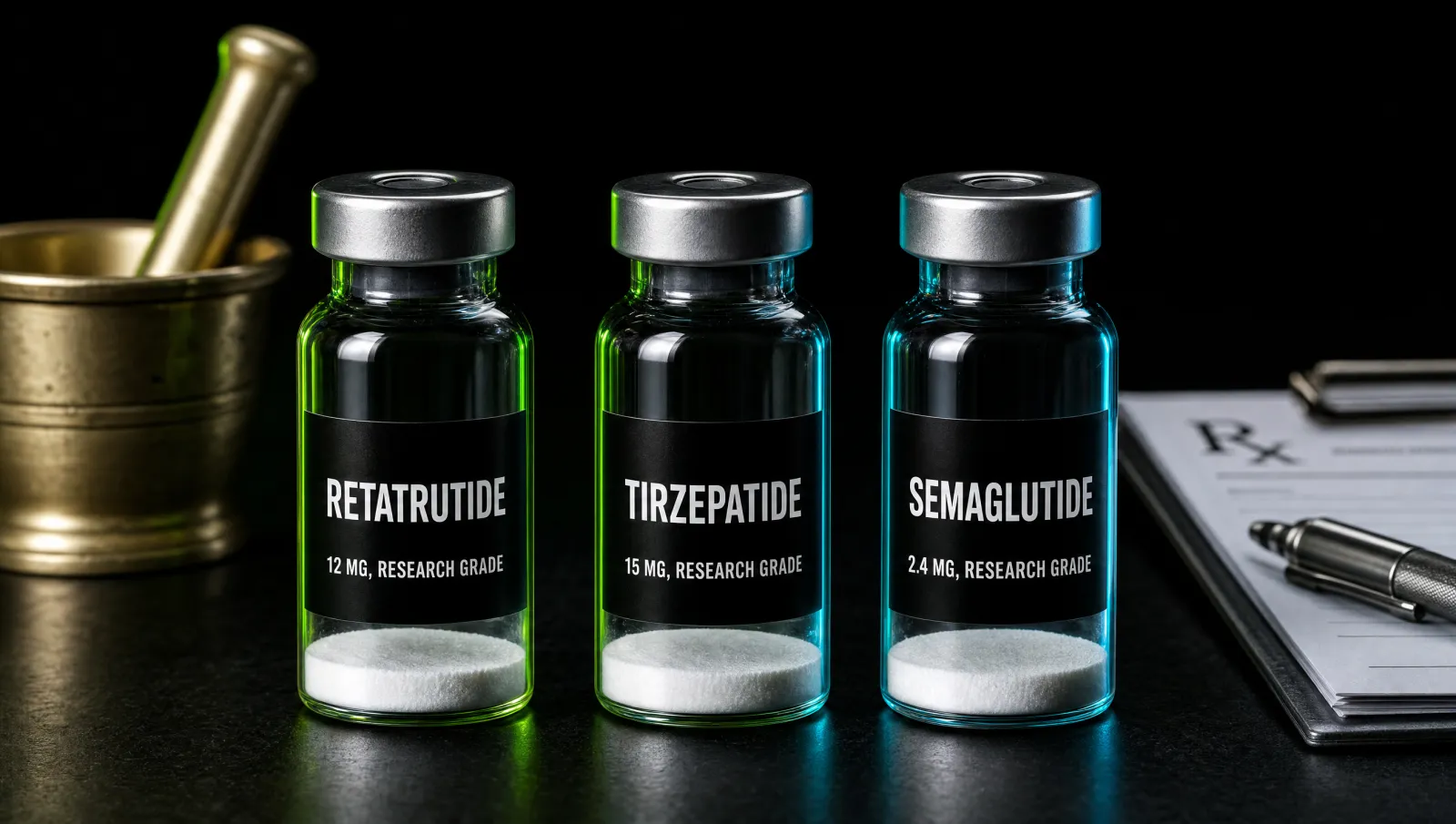
No trial cited here tests retatrutide head to head against semaglutide or tirzepatide. The Phase 2 diabetes trial did include dulaglutide, an approved GLP-1 drug. Gut side effects hit 35% on retatrutide and 35% on dulaglutide. The authors called the safety profile consistent with GLP-1 drugs, and with GIP and GLP-1 drugs. GIP is another gut hormone. Semaglutide is a GLP-1 drug, and tirzepatide is a GIP and GLP-1 drug. Rosenstock 2023
A separate study interviewed 40 people leaving the Phase 2 obesity trial. Of 36 who got the active drug, 31 noticed their eating change within the first 8 weeks. Two said adverse events made them take part in fewer social activities. Two linked that to new eating habits. Goetz 2025
Another study pooled data from three trials with 640 people in total. This type of study is called a meta-analysis, meaning it combines results from several trials into one. It found more side effects on retatrutide than on placebo, mainly gut and hypersensitivity events that were not severe. Hypersensitivity is an allergy-type reaction. Body weight ended an average of 10.66 kg lower than on placebo. Pasqualotto 2024
Our guide on how to know if peptides are real covers how product identity is checked.
Where to buy Retatrutide
If you're researching this compound, I've linked a trusted source below. It supports the channel.
See the sources that passed →References
- Jastreboff 2023, NEJM. NEJMoa2301972
- Rosenstock 2023, Lancet. 37385280
- Abdrabou 2025. PMC12026077
- Pasqualotto 2024, Metabolism Open. PMC11420505
- Sanyal 2024, Nature Medicine. 38858523
- Goetz 2025, Obesity Pillars. 41216380
- Jastreboff 2026, NEJM. 42814954
- Bellido 2026, Lancet. 42810372
- Katsi 2025, Biomolecules. PMC12190491
- Eli Lilly, May 2026. Topline results
- Eli Lilly, December 2025. Knee trial results
- TRIUMPH-1 trial registry entry. NCT05929066
- Phase 2 obesity trial registry entry and results. NCT04881760
- Wegovy prescribing information, FDA. 215256s026lbl
This content is for educational purposes only. These compounds are intended for research use. Nothing here is medical advice. A qualified clinician can advise on any health decision.
Where to buy Retatrutide
If you're researching this compound, I've linked a trusted source below. It supports the channel.
See the sources that passed →Share this article
Frequently Asked Questions
What are the most common side effects of retatrutide?
What is dysesthesia, and how serious was it in trials?
How does slow titration affect side effect tolerance?
Are serious side effects common with retatrutide?
Can retatrutide cause heart problems?
Who was left out of retatrutide trials?
Read Next
Disclaimer: This content is for educational purposes only. These compounds are intended for research use. Nothing here is medical advice. Always work with a qualified clinician before making changes to your health protocol.